Wednesday, 28 September 2016

Learn more about Peace and Security issues from these sources

One should not shy away from learning about the latest research in the field of International Security. It is your responsibility to know about major discussions of the season, develop a knowledge of the quality sources for the robust security analysis. There is no need to pay extra money for acquiring this knowledge. All you have to do is look for sources, subscribe to the lates news and read the material to be a decent expert in everything and have a conversation with your colleagues.

On the website page you can sign up for a Peace & Security Report which they will send to you each week by e-mail. I find this source to be one the best ones for a news digest on security because the articles provide a decent analysis of major events and add a specialist commentary. In each article they briefly state the important details related to the issue and explain how and why the problem has occurred. Sometimes they also give a brief prognosis of the likely developments. The writers are clearly knowledgeable and committed to their research, and their articles, albeit brief, give a clear and professional perspective of the topics.

U.S. Army Africa: Liberia Security Sector Reform

Just sign up for the latest reports and you will be receiving the one-two pages of report on a trending topic by email twice a week. The topics range from the contemporary security issues to the problems of the twentieth century. To note, the most useful information is frequently quite raw, i.e. requires some background knowledge to make use of their analytics. Hence, the analysis may be absolutely useless to you, but the facts and rumours give you the precious pieces of information you will not find elsewhere. Their website has a generous range of articles covering all world regions.


Their website is a wonderful source of academic analysis on various issues, such as the conflict resolution or democracy, the peace operations and so on. All of the content is exclusive to this institute. Once they decide on a topic of interest, they bring in the major actors into the discussion and cover it in their articles. Overall, I find that their articles are helpful to policy research and theoretical evaluations. Among the things to look for from USIP is a weekly bulletin with articles and political reports, as well as the webcasts page, showing the available recordings of the recent conferences hosted by an institute.


This website approaches important topics from a business perspective. Apparently, they target international enterpreneurs that work in a changing business climate and invest in developing markets. They tend to analyse the general trends, compared to a more narrowly focused coverage by Stratfor, for instance. They cover politics, economics, finance and security. You can sign up for a weekly newsletter to receive a brief outline of the most topical issues and commentary pieces written in response to readers' questions. I find this source to be rather business-focused, because the coverage is very general, not quite suitable for a deep security analysis. Overall, I think of it as one of the news sources, which gives you an idea of what is going on in the world.

UN Women: SC holds an open debate on women and peace and security

This source is very special. All of their contributors are women - the foreign policy analysts, journalists, researchers and NGO members. Their website is not very rich in content, but the weekly newsletter is a worthy piece. In each one you have several dozens of links to the sources, covering the terrorism, wars, ecology, and other things. The sources include articles, blogs, videos, photographs, podcasts and more. The quality is good enough for learning to understand the challenges created by the security problem, i.e. how it affects minorities or some vulnerable groups. Their information also tells how different communities engage with an issue. Therefore, you will leanr to understand how the problem looks from a bottom-up perspective. It is a very engaging source.


Their activities and articles specifically cover the energy security mostly from the EU perspective. The main benefit for those of you interested is the panel events for public attendance, but they also produce a free newsletter. In each you will see a note of the upcoming events and two or three articles on the topic of their speciality. If you do not have an opportunity to attend their talks, you can access some footage from the past event on their Youtube channel. Their research is top-notch and very exclusive, so you will not find some of the information elsewhere.


If you study security in the UK I assume you probably know about this institute and its activities. They are Britain's top source for latest security discussions and the topical issues in international relations and security. Each member of RUSI has a distinguished expertise in particulr field and make up-to-date observations on their area of interest. RUSI frequently organises conferences to present different perspectives on state policy, military research and security threats. Subscribe to their newletter to keep track of major security gatherings in UK and receive the latest commentary on security news as well as get access to some of its reports.

Police on duty, China

I strongly advise visiting the page and roaming through the content they have. So far this is the best source for top-notch analysis of various security areas all in one place. If you do not know the people and the sources for latest security analysis, this institute will give you the clues on what to look for in the Web. Subscribe to their free Newsletter to receive a Security Watch feed that covers some of the most interesting news in security collected from various sources throughout Europe. I noticed that the Security Watch digest is very strategic and useful to analysts, because it raises awarenness of the major security and military projects that will produce the greatest impact in the long-term. So read their newsletter carefully not to miss out on topics that will be trending in the next years.


This source may be a surprise to you, after all this institute is a part of Nanyang Technological University in Singapore. I suggest being open-minded and follow the rule "precious information comes from various sources". So expand your theoretical horizons and sign up for their newsletter and it will not disappoint you. Never mind the occasional grammatical "missteps" in English, their commentary is very hands-on and relevant to international security. They cover radicalisation, terrorism, war in Libya, international organisations and other topics. The huge benefit of this source is the diversity of presentation formats. You will receive emails with mini-essays on some topics and get a free access to the School's academic journals in others, not to mention the policy briefs and various reports.

Monday, 19 September 2016

How Clausewitzian is Bismarck's diplomacy: Bismarck's policy

Chapter II. Bismarck’s Realpolitik


Andrews (1965, p.345) asserts that German historians, the most ardent scholars of Bismarck’s diplomacy, could not identify the nature of Bismarck’s approach. They do not agree on the subject of Bismarck’s aims in foreign policy, and whether Bismarck’s decisions are actually the most appropriate in particular circumstances. However, Bismarck’s letters exchange with Gerlach from the 1850s demonstrates Bismarck’s attempts to identify some principles, based on their analysis of Prussia’s foreign policy (Steinberg, 2012, pp.130-134). Although the works theorising Bismarck’s approach are very scarce, a brief comparison is possible. 

This chapter shows that Bismarck’s account of international relations is quite Clausewitzian, both in terms of the concepts and the substance of Prussia’s interests. This chapter is divided into three subsections. The first, second and third subsection focus on the main themes of Bismarck’s Realpolitik: politics/policy-making, multiple options approach, and measures for peace.

1. Policy-making

Bismarck’s model of policy-making holds that one should only pursue the objectives dictated by state’s interests (Bismarck, January 27, 1863, cited in Petersdorf et al., 1924-1935, vol. X, p.157). Hence, statesman’s conduct should always be a representation of state’s goals and preferences (Pflanze, 1958, p.495). Bismarck’s thinking coincides with Clausewitz’s because both emphasise that state’s interest should be the ultimate guide for policy-making. For Clausewitz, such a commitment ensures that in a situation of war the policy-maker strives to deliver a policy which counteracts the chaos.

Furthermore, Bismarck finds the duty of a policy-maker in determining the interests of a state depending on particular circumstances. For instance, Bismarck (2007, p.173) in 1855 contemplates about the benefits of alliance and whether such tool can serve Prussia’s interests. In their view, Prussia does not have a stance on this question, and the state will be contempt with any option at any time. From the perspective of Clausewitz, such a flexibility provides a greater advantage for using war for political ends, because Prussia can choose a form of alliance that increases the chances of victory and serves the security purpose.

This is why Bismarck has opposed the idea of a principle-based policy. For instance, when Prussian King refuses to forge an alliance agreement with France due to the history of Franco-Prussian relations, Bismarck expresses their disapproval (Taylor, 1955, pp.35-40). This is because Bismarck’s ideal foreign policy is devoid of bias. This bias commands a policy-maker to restrict their options based on their feelings of affection and enmity (Bismarck, 2 May 1857, cited in Petersdorf et al., 1924-1935,vol.XIV, pp.464-468).

Additionally, Bismarck asserts that a policy-making needs to analyse the costs, risks and available power for a purpose (Steinberg, 2012, p.472). Indeed, as Clausewitz says, a war is a testing ground for the policy-maker’s ability to act rationally, and the unjustified risks should be avoided. Hence, Bismarck’s thinking fits with the description of a Clausewitz’s ideal leader. Such policy-maker has to have a calculating mind -a rational outlook- which allows them to grasp the situation perfectly and make the most appropriate decision. Therefore, Bismarck regards war as a useful method only if “all other means are exhausted”, and an objective is “worthy of the sacrifices which every war demands” (Bismarck, n.d., cited in Taylor, 1955, p.79).

2. A multiple options approach

There is one more important aspect of Bismarck’s diplomacy that does not correspond with Clausewitz’s meaning, although both contemplate about the same concerns. The greatest difficulty, as Bismarck notes in the meeting with delegation from Jena, is that political objectives in foreign policy are prone to drastic changes. Thus, a statesman has to possess the ability to grasp changes in any situation and act to the greatest possible advantage with the minimal degree of harm to the state (Petersdorf et al., 1924-1935, vol. XIII, 1924-1935, p.468). Consequently, Bismarck invents a solution for tackling the greatest obstacle to successful policy-making - the constantly changing political circumstances. The key is to keep options open in every political situation (Pflanze, 1958, p.502). The multiple options approach to state politics is not covered in any of Clausewitz’s writings.

Nonetheless, Bismarck’s solution for a political uncertainty is based on the principles of rationality. For instance, in their conversation with Friedjung, Bismarck says, in order to attain a political goal, one has to try every possible path to it, where the most dangerous one is taken at last (Petersdorf et al., 1924-1935, vol. IX, p.50). Clausewitz’s policy-maker would do the same. Bismarck also writes that a policy-maker should never intentionally limit the range of moves on the chessboard, and even less so because of the fleeting emotions (Bismarck, 2/4 May 1860, Petersdorf et al., 1924-1935, vol. XIV, p.549). Bismarck suggests that the opponent will take an advantage of one’s “kindness without fear and without thanks” (Bismarck, 2 May 1857, cited in Persdorf et al., 1924-1935, vol. XIV, pp.464-468).

Moreover, Bismarck contrives to create the alternative ways to deliver policy and work with multiple potential courses of action (Holborn, 1960, p.95). For instance, one interesting way is to place the state in the middle between the states with hostile interests. Such a move enables Bismarck to sign off an alliance with either of the parties, and choose the most favourable course of action (Pflanze, 1958, p.503). This method corresponds with Clausewitz’s calculations for strategic policy-making. Just as Machiavelli, Clausewitz finds that policy-maker needs to use various political moves to eliminate the chance of aggression by an opponent. For instance, the middle-ground stance has enabled Bismarck to create an alternative way, ensuring the annexation of Denmark’s Schleswig-Holstein duchies (Steefel, 1932, p.95). Due to the discord caused by the diverse presence of interests, Bismarck has been able to play the states against one another much to Prussia’s advantage (Pflanze, 1958, pp.505-506).

Hence, Bismarck’s strategy is not envisaged in Clausewitz’s writings, it is still based on the same assumptions about the workings of the international system. According to Bismarck’s reasoning, the Clausewitzian model of state interests finds that a state’s interests depend on the position of other states, and that a state’s interest can produce multiple connections to various actors. Consequently, a state may be forced to pursue its interests in several directions at once to produce the best outcome.

3. Restraint and a lasting peace

By Gemälde von Anton von Werner, 1871,.Bismarck reads the Proclamation of the German Empire at Versailles following Prussia's victory
 in the Franco-Prussian War. Prince F. William, Field Marshal von Moltke and Generakl A. von Rook are present with their staff.


Scholars like Liddell Hart (2014) regard Bismarck as a destabiliser of peace. Nevertheless, there are others, like Craig (1964, p.215), and Heuser (2002, pp.61-63) who reject this idea. Bismarck’s idea of policy seeks to promote Prussia’s interests without undermining the international system, that is why Craig (1964) and Heuser (2002) reject such a notion. For instance, Pflanze (1958, p.492) explains that Bismarck’s project of a unified Germany has not significantly upset the balance of power. This argument also highlights that Clausewitz’s ultimate objective- a peace- has been very important to Bismarck.

In 1877, Bismarck writes in a letter that the fight for hegemony would break the balance of power and create too many enemies for Germany (Herwig, 1998, p.71). For that reason, Germany should never pursue a position of hegemony in European relations. Consequently, just like Clausewitz (2014, pp.237-238) disapproving of France’s unconstrained conquest of power, Bismarck rejects the idea. Both would agree that such course of action will threaten Prussia’s interests and could make other powers, such as France, hostile to Prussia.

Furthermore, Bismarck spends a lot of time contemplating about the measures that could benefit Prussia and stabilise the balance of power. For example, in the memoirs, Bismarck suggests that alliances can be used to maintain the balance of power (Ritter and Stadelmann, 1924-1932, vol. XV, no.398). Bismarck speaks of it due to the conviction that revolutionary states need to be balanced by the united appearance of the monarchic elite (Petersdorf et al., 1924-35, vol. VIII, p.106). This counteraction may prevent the violent overthrow of monarchy in any of the concerned states (ibid.). The abolition of monarchic rule is not only seen as a threat to Prussia’s interests but also to the peace and stability of the state (Rothfels, 1934). A Clausewitzian policy-maker is likely to adopt such measures if they regard the dominance of monarchy in European political order beneficial to Prussia.

Also, Bismarck’s means of promoting peace are based on the two principles: the restraint and control. For instance, Taylor (1955, p.58) conducts a research on Bismarck’s political decision-making and concludes that Bismarck’s foreign policy is built on concessions. Bismarck makes these concessions to secure an agreement between the states and achieve a desired outcome but without subjecting the opponent to severe humiliation. A Clausewitzian ideal policy-maker behaves would be this way too; a statesman is meant to act in a way which maximises the chance of acquiring a favourable outcome, but without straining the inter-state relations needlessly.

Moreover, Bismarck argues that a control and restrain should always be exercised, even when the opponent is defeated and cannot fight back. For example, Bismarck has once said that a Napoleon I’s mistakes teach to practice a “wise moderation after the greatest successes” (Petersdorf et al., 1924-1935, vol. IX, pp.93-94). A similar lesson is derived by Clausewitz, who finds that Napoleon’s peace terms have frequently disregarded the feelings of the defeated, which is why the latter become so determined to retaliate later (Handel, 2000, pp.196-197).

Additionally, both Bismarck and Clausewitz affirm that a continuous “give and take of political goals and concessions” bargaining convinces the parties of the idea that prolongation of war brings them too many disadvantages, which the victory cannot compensate for (Fisher, 2007, pp.43-44). For instance, in a war against Austria, Bismarck implements political measures to ensure that Austria does not feel antagonised and may agree to become an ally in the next war (Taylor, 1955, p.86). The main concession on Bismarck’s part, which becomes a bargain for the future cooperation, is the agreement on sparing the Austria from annexation (Bismarck, n.d., cited in Taylor, 1955, p.88).

To summarise, Bismarck’s conduct of Realpolitik is intensely Clausewitzian in nature. The Bismarck’s theory demonstrates a cautious and committed statesman who calculates the range of potential opportunities for advancing Prussia’s interests. The concepts of rationalism, a balance of power, an alliance, and a limitation are built into the framework of state interests, and are used to make cautious inferences about policy-making; the careful calculation helps Prussia attain a political goal with minimal exposure to negative outcomes and brings the lowest costs, just as Clausewitz has envisaged. Although the multiple options approach is unaccounted by Clausewitz’s framework, it is uses the same set of values and considerations.

Thursday, 15 September 2016

How Clausewitzian is Bismarck's diplomacy: the literature analysis. Part II

Chapter I. Clausewitz and responses to it cont'd

By unknown artist. Book scan from Muller-Baden, Emanuel, editor, Library of common and practical information, volume 4, Berlin, Leipzig


Frazer and Hutchings (2011) suggest that Clausewitz’s theory of politics is inherently tied to violence, although they admit that violence can serve certain political ends and be limited to one occasion. Frazer and Hutchings (2011, p.57) note that Clausewitz’s books are “sometimes read” as a source regarding violence as a “central, perennial” tool in a policy-maker’s toolbox. However, this claim does not give any evidence and the authors leave all the analytical work amiss. Moreover, contemporary scholars do not interpret Clausewitz in such way and never imply that the absence of war in a toolbox makes a state deficient or weak (Howard, 1969, p.194). Even non-interpreting academics such as Esposito (1954) do not demonstrate any grounds for the claim and read Clausewitz’s words correctly. In addition, at the end of the article, Frazer and Hutchings (2011, p.60) contradict their own argument and agree with Aron (1983, pp.100-116), saying that Clausewitz’s model of state’s policy relies on the variety of means, regarding violence to be just one of the tools available.

Furthermore, Frazer and Hutchings (2011, p.58) believe that only “incapable” policy-makers would need war to compensate for their wrong actions and use violence to achieve a particular political result. They rest their claim on Clausewitz’s words, holding that war is meant to achieve the destruction of the opponent; and the conquered state should be forced to submit to the peace dictated by the victor. This view may be based on the opinion of the 18th century strategists, such as General Lossau (Gat, 1989, p.242), thinking that states engage in war because violence can achieve something that peaceful methods cannot.

Nonetheless, Clausewitz’s view is different, it only holds that war has the power of enforcement which is a unique quality compared to that of other policy instruments; it compels the defeated state to satisfy the winner’s demands (Wagner, 2000). However, it is not clear why they deduce that in Clausewitz’s opinion politicians use war to fix their past political decisions. The authors’ view demonstrates how Clausewitz becomes misread once the reader forgets to account for the political dimension, which is “the womb in which war develops” (Howard and Paret, 1976, p.149).

Fraser and Hutchings (2011) think that Clausewitz urges policy-makers to start a war and use the overwhelming military strength to destroy the army, bend the defeated state to achieve their goals. The issue of how the political objectives become achieved by military means, which is the actual focus of Clausewitz’s work, is not addressed. In comparison, Esposito (1954) concisely explains the role of military operations and how they serve a policy. In essence, Esposito (1954, p.20) analyses the meaning and the context for the use of word “destruction” in Clausewitz’s writings.

Although Clausewitz speaks of destroying enemy’s military forces, the destruction is not necessarily physical; the state has to make the opponent unable to fight using any means suitable for policy-makers and the military (Esposito, 1954, p.20). Moreover, Howard (1983, p.44) goes on to argue that the kind of destruction that Clausewitz finds to be crucial to winning is not physical, but moral one. For instance, Clausewitz speaks of weapons and prisoners as the true trophies of victory and the evidence of one’s superiority over the enemy (Howard and Paret, 1976, p.232). Hence, the more trophies one side acquires by the end of the battle, the greater the moral damage inflicted on the enemy (Howard, 1983, pp.44-45). Another instance is that one successful battle can end the war because it defeats the opponent’s spirit to fight (Howard and Paret, 1976, p.97).

In contrast to Fraser and Hutchings’ view (2011) holding that Clausewitz’s war is meant to overwrite policy-maker’s failure, Esposito (1954) explains that war emerges out of the context of political relations, building on the web of interests constructing a balance of power system (Howard and Paret, 1976, p.373). In other words, war is treated as one of the elements of social engagement between nations (Esposito, 1954, p.20). Moreover, the character of war is determined by the character of policy; if policy objectives are grand then the war will be also, and it will go closer to its absolute form (Howard and Paret, 1976, pp.87-88).

What is unique about Esposito’s study (1954) is their perspective on Clausewitz’s model of a policy-maker. The author quotes the words of British Mayor Murphy from 1909, holding that every policy-maker should be regarded as a Clausewitz’s follower. A Clausewitzian policy-maker treats the war as an instrument of policy and a fair act of relations between nations, and a means of promoting state interests (Murphy, 1909, cited in Esposito, 1954, p.21). Nonetheless, the quote misinterprets Clausewitz’s instructions and holds that a policy-maker is likely to engage in absolute war to achieve the political ends. On the other hand, Clausewitz asserts that the more war is driven to pursue an objective the less it will become an absolute war (Howard and Paret, 1976, p.88). In addition, Esposito (1954, p.22) soften the rhetoric, admitting that Clausewitz advises politicians to think carefully about the need for any war and think more about the policy which a war should serve.

The policy-makers’ conduct of war receives significant attention from Howard (1969), who builds upon Clausewitz’s traditional discussion of war as a continuation of policy. Howard (1969) argues that Clausewitz’s readers fail to grasp one of the crucial elements namely the self-limitation. The studies discussed so far make an impression that Clausewitz’ ideal policy-maker is calculating, yet quite willing to use violence to achieve the desired ends (Walzer, 1978, p.79). On the other hand, Howard (1969) convincingly asserts that Clausewitzian policy-maker which uses war as a policy tool must possess qualities such as self-restraint and moral awareness.

Howard (1969) draws on the political framework of limited war in order to justify it. Indeed, Howard and Paret’s translation of Clausewitz’s work (1976, p.81) demonstrates that political conditions of the limited war can take the form of self-restraint. With the condition that war is subordinated to politics, the smaller the concessions which a state demands from an opponent, the less the opponent is likely to resist the demands. Consequently, the less the adversary is inclined to object to one’s demand, the less one needs to do to compel them to obey (Howard and Paret, 1976, p.81).

Smith (2005, p.13) similarly thinks that Clausewitz values the quality of self-restraint in policy-makers. For instance, Clausewitz writes in one letter that a generous treatment of the defeated Napoleon will prevent the escalation of hostility and decrease the chances of a military resistance in the future (ibid.). Nonetheless, it is important to note that such line of reasoning reflects an instrumentalist approach, not necessarily a moral one. To add, Keegan (1993, p.385) is convinced that Clausewitz advocates self-restraint and suggests that the habit of restraint in politics can ultimately result in fewer wars.

Moreover, Howard (1969) justifies their position using Clausewitz’s writings and the analysis of historical context. The kind of restraint which the author means is a type of rationalist control to be exercised by a policy-maker. Howard’s interpretation (1969, p.196) of Clausewitz’s work implies that, not only a war is an instrument of policy, but it should be one. It rests on the view that political relations do not stop when states become engaged in a war (Howard and Paret, 1976, p.607). Thus, politics still influences the actions of conflicting states, so it would be senseless to delegate the war to the military alone (Howard and Paret, 1976, p.607). Also, the common sense urges policy-makers to be in control of the war and the military conduct, because political conditions shape the war and violence can make any war absolute (Smith, 2005, p.102). Heuser (2002, p.42) agrees with Howard (1969). Heuser (2002, p.42) scrutinises the difference between limited and absolute wars and regards the two as the complete opposites: on of self-discipline and other of brute force, the war with restraints preventing the outbreak of chaos and the war that destroys the civil society.

Nevertheless, this ground alone does not suffice to explain why Howard (1969) thinks that Clausewitz’s instrumentalist approach to war addresses the issues of morality. Therefore, Howard (1969) communicates the idea of morality in a different way. Howard (1969, p.198) draws on Clausewitz’s lessons to take from French Revolution. Howard and Paret’s translation (1976, pp.585-594) reads that French Revolution demonstrates an unprecedented case of mass-scale casualties during the war, and this fact makes Clausewitz anxious about its prospects. Clausewitz finds that the limits to the use of violence become weaker due to the growth of nationalism; the bonds which limit the scale of violence become fragile and the wars is reaching its absolute form (Howard and Paret, 1976, pp.585-594).

This argument certainly demonstrates that Clausewitz advocates greater limitations to be adopted to limit the scale of war. However, there is no agreement among the scholars as to whether in Clausewitz’s view morality can ever become a mechanism of restraint. In addition, Nielsen (2007, p.213) notes that Clausewitz has equated morality with positive law, which they find useless. This is because morality cannot override the state’s right to pursue its interests (Clausewitz, 2014, p.239).
However, in relation to the military operations, Clausewitz highlights the need for making decisions based with some respect for morality, although Howard (1969) does not mention it at all. In one passage, Clausewitz notes that the strategy planning a destruction of the opponent’s ability to fight has to address the moral issues (Howard and Paret, 1976, p.97). Hence, the state should evaluate the need for destruction of the opponent based on morality, just as it does with costs, and risks (ibid.). Clausewitz is painfully aware of the horrors of war and deliberately gives a detailed account of the disadvantages such a policy tool holds (Nielsen, 2007, p.223).

Tuesday, 13 September 2016

How Clausewitzian is Bismarck's diplomacy: the literature analysis. Part I

Chapter I. Clausewitz and responses to it

By Josef Schneider, 1966. "Tafelrunde im von-der-Leyenschen Hof"


Carl von Clausewitz is well-known for their contribution to the study of warfare. However, political scholars ascribe more importance to their political approach to war. For instance, Howard (1969) points out that the principal idea of the Clausewitz’s entire work is that a war is a political instrument and a continuation of politics (Howard and Paret, 1976, p.87). Thus, this chapter covers a political contribution of Clausewitz’s theory to the strategic studies. Chapter explains the principles of a theory based on the reflections by social scientists. Each of the following articles helps to construct a meaningful model of Clausewitz’s political framework.
Smith’s article (1990) deserves some consideration first. The author attempts to capture the evasive political values and meanings which Clausewitz’s has relied to create a theory. The whole study is dedicated to answering the question: “What kind of political framework did Clausewitz have in mind when he argued that war was part of politics?”. Author explores political concepts and presents their interpretation of the meaning which Clausewitz has attributed to each.

In section on foreign policy, Smith (1990) works to identify the main political ideas of Clausewitz’s work. For instance, Smith (1990) elaborates that the most important duty of a state is to defend itself against the enemies from the outside; he supports it with a quote from Clausewitz’s letter (9 September 1824, cited in Ritter, 1972, no.275). At the same time, Smith (1990, p.44) argues, to Clausewitz the state is similar to a living organism, which needs to engage in activities in order to perpetuate itself.

A state also needs to maintain its honour and dignity just as it needs to continue its existence. In support of the argument Smith (1990, p.44) refers to Clausewitz’s writing about Prussia’s disastrous defeat in 1806, which reads that Prussia should have preferred to be eliminated rather than be humiliated in the war against Napoleon (Rothfels, 1922, p.4). This letter makes an impression that Prussia has bowed down to France and abandoned the pursuit of “glory and interests” (Clausewitz, 2014, p.240). 

However, Parkinson (2002, pp.45-48) writes that Friedrich Wilhelm in fact demonstrates a strong determination to defend Prussia’s territories; he plans a war soon after learning about Napoleon’s determination to weaken Prussia and expropriate its land. Moreover, Parkinson (2002, pp.48-50) explains that Clausewitz is quite pleased with Friedrich’s spirit to fight at the time. Clausewitz is full of optimism, although the pace of military mobilisation in 1806 has been unsatisfyingly slow for him. Hence, contrary to Clausewitz’s misleading words on the war of 1806, Prussia has decided to defend its dignity and Clausewitz approves it later, on the contrary to the impression constructed by Smith (1990).

Definitely Smith’s argument (1990) is unreliable, because it does not take into account Clausewitz’s elaboration about political objectives. It states that state’s priorities tend to change over time (Cozette, 2010, p.440). Although Clausewitz, similarly to Morgenthau, assigns extreme importance to the objective of survival (Nielsen, 2007, p.215), scholars diverge on the issue of importance of other objectives. For instance, both Aron (1983, pp.101-102) and Nielsen (2007, pp.215-216) do not approve of Rapoport (1968, p.22), who claims that Clausewitz has advocated the pursuit of power. Cozette (2010, p.440) is right to conclude that Clausewitz deliberately does not seek to define state’s ultimate political objectives in order to maintain flexibility.

On the other hand, Smith (1990) makes a compelling argument about the nature of state’s engagement in international relations. State’s behaviour is dictated by rationalist considerations. Clausewitz asserts that each state has a right to pursue its interests and behave to its own advantage, even if it means to disregard the interests of other states (Clausewitz, 2014, p.239).  Nonetheless, Smith (1990) among others, noted by Fearon (1995, p.380), does not expand on Clausewitz’s puzzle of war.

Instead, Stoler (2005), opens this issue in the controversy of the high costs and unpredictability of war, set against the potential benefit from waging a war (Stoler, 2005). Nonetheless, Smith’s interpretation of Clausewitz (1990) is consistent with the rules of rationalism, holding the risks and costs of war urge policy-makers to prioritise negotiations over violence; if the option to negotiate cannot be used to achieve political objective the war can become a viable option (Fearon, 1995).
Furthermore, Smith (1990) is the only author who expands on the role of alliances in Clausewitz’s framework, compared to Stoler (2005) and others. 

While Corn (September 2006, p.8) wonders why Clausewitz has not extensively covered the topic of alliances, Smith (1990) makes an effort to explain Clausewitz’s implicit message in relation to it. For example, Clausewitz implies that the interests of states and people are connected within the complex web of relations, which helps to balance the sets of interests against one another (Howard and Paret, 1976, p.373). Clausewitz means that the total set of relationships “serves” to uphold the order of the system as a whole, as long as states use reason in their conduct of policy-making (Smith, 1990, p.49). Similarly, the contributions of Ranke and Treitschke (Holbraad, 1970, p.87) find that Clausewitz thinks the balance of power is maintained by the system of clashing interests.

Also, Smith (1990) interprets the ideas of Clausewitz’s in the form of “war as the continuation of politics”. The principle is that war is a tool of a policy and this notion holds the ultimate significance to this paper.  Smith (1990, p.55) conveys that a military victory which becomes a political aim no longer serves a policy objective (Howard and Paret, 1976, p.605). Consequently, any such war loses its meaning (ibid). Thus, given the unpredictable and uncontrollable nature of war it is a statesman’s duty to be diligent at policy-making, and checking whether military decisions serve state’s interests (Smith, 1990, p.55). However, Smith’s account (1990) does not provide an analysis of Clausewitz, contrary to Stoler (2005), who addresses the dual nature of war in the policy-making.

Stoler’s work (2005) enhances the discussion of Clausewitz’s political framework and addresses the diplomatic aspects of war. The author proposes to use Clausewitz’s work as a manual for an aspiring diplomat of war. For instance, Stoler (2005, p.7) explains, the state which is set on the path of war has to alienate the enemy. Author refers to the books On War to expand on it. In the writings Clausewitz shows that alienation serves to reduce the state’s military and political by other states (Howard and Paret, 1976, p.35). Additionally, Stoler (2005, p.7) cites Clausewitz, a state has to maximise an international support, sign alliance treaties or obtain the assurances of other actors’ neutrality. This is an example of Clausewitz’s thinking blurring the boundary between a political and military thinking. Clausewitz focuses on achieving a military victory using the actions with “direct political repercussions”, such as the neutralising of alliance, the swaying of other state’s position in one’s favour, and so on (Howard and Paret, 1976, p.35). Also, Clausewitz’s political game reminds of Machiavelli’s well-known piece The Prince (Marriott, 1908), which advocates the gaining of other state’s respect and support for the cause.

Furthermore, Clausewitz holds two different perspectives on war. A war is an “act of policy” and a “political instrument” at the same time (Howard and Paret, 1976), because war is capable of compelling the adversary to do what one deems desirable. On the other hand, says Stoler (2005, p.6), the essence of war – a pure violence - interferes with a rationalist conduct of war; it significantly undermines the act of war as a policy instrument. As a result, the dual nature of war is expressed in the form of a mitigated rational perspective, which uses limited war to achieve political ends. Clausewitz sets this perspective in a contrast to the view that the war is too hard to control, and that its nature is just pure violence and absolute destruction.

Thus, Stoler (2005) highlights two conclusions of this model of war. Firstly, policy-makers need to adopt an extra set of measures to control the violence and limit it to the pursuit of political goal only. Secondly, political considerations ought to dominate over the military ones, because war is intended to serve political interests (Howard and Paret, 1976, pp.87-89). Hence, Stoler (2005) derives an elegant perspective on Clausewitz’s war as a policy tool. However, Stoler (2005, p.7) points out one weakness of Clausewitz’s model. Clausewitz fails to give a solution to the paradox of violence. The paradox is that violence can be used to achieve a policy end, but it is a quite unreliable policy tool, and probably not the best one too.

This judgement is valid, and Clausewitz recognises how unsteady the war as an instrument is. For that reason, Clausewitz gives policy-makers several tips to avoid an absolute war: ensure the unceasing dominance of policy over military operations, discard of the belief that a policy-maker can confidently predict the course and outcome of war (Howard and Paret, 1976, p.87). The first advice reinforces the idea that war is a policy tool and implies that policy-makers definitely need to interact closely with the military. Clausewitz finds it disappointing when politicians make orders to the military that overwrite all the previous efforts to achieve an objective (Howard and Paret, 1976, p.608). Thus, Clausewitz recommends statesmen to acquire a decent understanding of military policy and establish communication with the military (Howard, 1983, p.38).

Another point Clausewitz makes is that an analysis of war’s potential must always account for one “ultimate objective” of all wars, which is a lasting peace (Howard and Paret, 1976, p.159). Despite all the attention Clausewitz pays to the conduct of war, Clausewitz is the proponent of peace. For instance, Aron (1987, p.119) argues, for Clausewitz’s, politics should never be the continuation of war; politics can only achieve its objectives both in peace and war, meaning war is not considered as the essential element of international relations. Furthermore, Aron (1976, p.258) notes that Clausewitz does not see a war being the lasting feature of states’ relations; once the war stops it does not recover to be fought for the same objectives.

Cozette (2010, p.440) agrees and holds that the balance of power is built on a system of conflicting interests, but these conflicts are mostly non-violent. In addition, Clausewitz notes, the accurate estimation of war’s development is possible if one is able to conduct a “methodical examination” and possesses “the intuition of a genius” (Howard and Paret, 1976, p. 586). Consequently, Howard (1983, p.14) assumes that Clausewitz views the dangers of war as an opportunity for the talented policy-maker and used to their advantage.

Moreover, Stoler (2005) makes it clear that a political conduct of war inevitably experiences the impacts of violence. The violence is a natural part of war and it leaves politics in the uncomfortable space with ambiguous strategic potential and the scares of possible developments (Frazer and Hutchings, 2011, p.68). Thus, it is important to examine the ways in which politics interacts violence in order to clarify Clausewitz’s position on the utilisation of war. 

Saturday, 19 March 2016

The implications of the ISIS data leak

On March the 10th, Mr Greenberg, the security journalist from WIRED, has published an article about the intelligence leak from ISIS. According to the article, a group's defector had purposefully leaked the list with names and personal data of the 22 000 ISIS members. In fact, this list is supposed to contain an extremely valuable information, such as the members' addresses, phone numbers and the home town. 


I think it is a very good news, but some sceptics just do not see how this information may help to stop terrorism, or be used to protect citizens of various states. As much as this fact surprises me, the evidence of this lack of understanding has caught me by surprise in a discussion within one of the security groups on LinkedIn. 

To be fair, not many people have an actual knowledge of the anti-terrorism strategy. I assume that most of you are affiliated to either Europe or Northern America, so I will focus on their model of anti-terrorist programmes. Regarding the states in other parts of the world (except Australia), it should be noted that anti-terrorist units may not exist in some states. In other cases, they may focus on particular religious/political groups or act in strictly defined cases (such as the threat of a terrorist act). Nonetheless, I must add that ISIS attacks happen not only in Syria and Iraq but in Saudi Arabia, Egypt, Yemen and other states. The nice outline of those attacks can be found here.

A Screenshot from the microfilm "Legions of Foreign Fighters Battle for IS", Jan 2, 2016


In our case, a Western strategy generally covers a wide area of radicalisation processes and terrorist activities. Therefore, the leaked list is a gift (or a reward) to many intelligence officers, security analysts, policemen, policy-makers and social scientists. A huge number of various groups involved in counter-radicalisation and anti-terrorist operations in one way or another will benefit from it.

The list of potential benefits will be too long to keep reader from yawning. Hence, I mention only a few courses of action which the security agencies will take (or already have taken).

Indeed, as it has been reported by numerous security groups, the foreign fighters constitute a significant portion of the group's operational unit. That is why this piece of data probably identifies the majority of an ISIS foreign fighters. To begin with, a radical group or a terrorist groups such as ISIS has a structure, each member plays a particular role. Foreign fighters, are the members that mostly participate in land operations. They are generally the footsoldiers. They may engage in violence, kidnap civilians, torture prisoners to get information, smuggle the weaponry and etc. To be clear, not all of them take an active part in these operations, some of them stay on the sidelines, or at least, do so at the beginning (the numerous days after their arrival to the operation site). To those of you particularly interested in a portrait of a jihadi foreign fighter I advise to have a look at an ICSR work, for instance a post by Shiraz Maher (a former member of Hizb-ut Tahrir).

Some of you may have already heard that the phenomena of foreign fighters gives a great headache to policy-makers and operatives. They are hard to trace, difficult to account for, and a pain to deal with legally. Hence, they slip through the security holes to the failed states and take part in activities that are illegal. Knowing their names helps to locate, transport and prosecute them in their countries of origin. Some of you might wonder why it has it been such a problem to do so in the first place. Among other things, the foreign fighters frequently leave their country using the fake IDs with feigned names in them. This fact makes it difficult to do anything about the situation.


Another implication is that this list can be used to uncover the radicalisation hubs and the coordinators. For more information on the group structure and the processes within a radical group I suggest starting with Sageman's book called Understanding Terror Networks. Coordinators are the members of ISIS that provide the future foreign fighters with resources, fake documents and destination information. Dealing with coordinators and radicalisation spots is more difficult to do. It requires more than just this list alone. It needs a coordinated effort by the police and intelligence officers to sort out the information they already have, add the new data in order to locate and identify the objects.

This stage precisely deals with the issue of concern of the policy sceptics. Some of them fail to see how this list has anything to do with the security of France, for example. To explain why they are wrong I must emphasise how big and influential this organisation is. ISIS is not some group that concentrates its sources in just one city, or even one country, such as Syria or Iraq. It is a network with a loose hierarchy but stable and growing.

It is a network of an international scale, and its members live in countries like the UK, Germany, Denmark, the US, and others. Apart from open confrontation, they engage in other activities. They recruit new members, spread their influence in society, do money-laundering and create explosives. See this article to catch a glimpse of the vibrant diversity of ISIS' recruitment strategy that enables the organisation to reach a wider audience.

In our case, coordinators can be identified via the channels they use to transfer the foreign fighters. Coordinators are the important pieces of the ISIS puzzle. They connect members to each other and serve the goals of the higher group authorities. On a network map a coordinator would be the big bright locus that is heavily connected to many group members that perform various roles. Some of them cannot be reached without the coordinator due to secrecy and the impossibility to get a hold of the more influential figures.


To be short, other benefits are closely related to what has already been said. This list gives security analysts a thread that will lead to untangling the ISIS. Without such information it is problematic to uncover what it is really like. We don't know how well-spread they are, which locations they concentrate on, where they recruit their members from, how they communicate with one another, how they transfer their commodities and so on. The insider information is valuable enough to help us this much. I hope that my post helps to answer some of your questions and understand the security better.

Wednesday, 24 February 2016

How Clausewitzian is Bismarck's diplomacy:an introduction

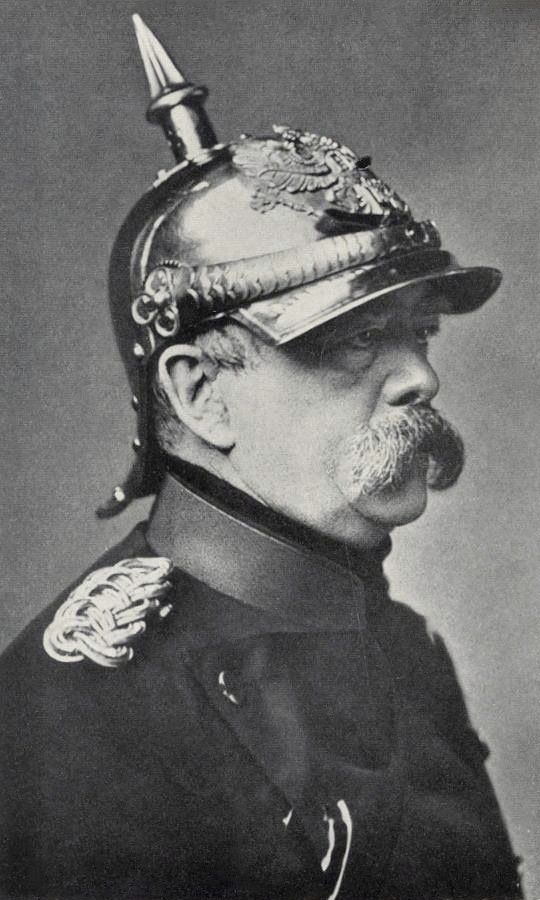
Otto von Bismarck is born in 1815 in Mark Branderburg, Prussia. Bismarck has acquired a degree in law from the University of Göttingen to become a civil servant. From 1847 onwards Bismarck has been a member of the Prussian Diet and Erfurt Parliament, served as a Prussian ambassador to the Germanic Diet, to Russia and to France (Olson and Shadle, 1991, p.57). From 1862 onwards, Bismarck works as a Minister-President and wages the three wars which unify Germany, and becomes the first Chancellor of Germany. Bismarck’s stunning political success with German plan is admired by many political figures. For instance, Kissinger (March 31, 2011) calls Bismarck a “master statesman”. Scholars recognise Bismarck’s political genius and analyse it in their works. For example, Pflanze (1958, pp.492-493) notes that Bismarck is a statesman with an extraordinary sense judgement and an ability to pursue their goal in the power politics of the 19th century.
By Uni Dusseldorf: Bismarck with Pickelhaube
Bismarck is a popular subject in the academic research of the post-First World War period. Bismarck's contribution to the process of German unification has been studied by historians and publicists. However, scholars have not sufficiently explained Bismarck’s approach to diplomacy. Notably, the issue which remains largely unaddressed is the set of principles which Bismarck’s policy adheres to (Holborn, 1960, p.95). This omission is crucial to understanding Bismarck, because their political decisions have been noted to follow some rules which Bismarck has been devoted to (ibid.). There are some scholars, such as Holborn (1960) and Pflanze (1958), who attempt to sketch them, using the Bismarck’s early correspondence and memoirs. However, the shallow theoretical base, which the contemporary researchers call Realpolitik, fails to explain Bismarck’s framework of policy-making. Moreover, these studies fall short of explaining how Bismarck has dealt with international politics, and managed to unify Germany in three consecutive wars, which remains to be a riddle yet to resolve for many historians (Kissinger, March 31, 2011).                                                                                  
In order to avoid any confusion in respect of the substance of Realpolitik, a brief explanation is presented here. Bismarck’s version of the Realpolitik tradition belongs to the realist school, which includes contributions of Machiavelli (Dietz, 1986), Waltz (Wayman and Diehl, 1994) and others. Nevertheless, Bismarck’s understanding of Realpolitik is scarcely reflected in Bismarck’s documents and letters. Consequently, Realpolitik is watered down to just several ideas, which can be identified in Bismarck’s style of diplomacy.
The origins of the mentioned approach lie in the work of Rochau (1853), called Grundsätze der Realpolitik. Nonetheless, Rochau’s formulation of Realpolitik is significantly different from Bismarck’s, and is mostly forgotten. For instance, Holborn (1960, pp.94-95) notes the change in the meaning after the 1948. Realpolitik is identified as a form of politics, devoid of ideological and moral principles (Oxford Dictionaries, n.d.), and focusing on the pursuit of state interests, using the break-down of the power structures (McLean and McMillan, 2009).

However, Bismarck’s Realpolitik does not contain an extensive set of principles because Bismarck soon acquires the prime-ministerial position and abandons the theory. Nonetheless, scholars use another approach to learn more about Bismarck’s theoretical background. For instance, Stoler (2005, p.7) points out that Bismarck is the most successful practitioner of “the war as a continuation of policy” approach, developed by a Prussian scholar Clausewitz. However, there is no extensive research to support this claim. This is so, because the practical application of Clausewitz’s theory is exceedingly understudied (Stoler, 2005, p.8), which in turn is due to the scarcity of cases of politicians who practice it (Esposito, 1954). Thus, the test of Clausewitz’s political theory on Bismarck’s policy-making may enrich the research on both Bismarck and Clausewitz, and help to develop the policy-making, international relations and strategy.

By Wilhelm Camphausen. Napoleon III and Bismarck talk after the Napoleon's capture at the battle of Sedan

The reason why Bismarck is noted to be a Clausewitzian is because they share a similar view of the war and the policy-making. Clausewitz holds a high regard for one’s ability to control the machinery of war and argues that a great policy-maker has to be able to exercise restraint, and conduct a war only for the sake of securing a political objective. To note, is it even possible to remain so focused on the objective, and remain unaffected by the chaos and violence of war? Spence (2013, p.149) argues that it is very difficult to concentrate on achieving political goal from the moment of the war’s outbreak. However, Clausewitz points out that a reason and impassionate judgement can turn a war into a policy instrument.

The kind of control and the rationalist stance, which Clausewitz praises and Spence (2013) finds extremely difficult to achieve, is frequently attributed to Bismarck, who manages to reorganise Europe and unify Germany in just over a decade (Kissinger, March 31, 2011). Bismarck is an example of a statesman who delivers a political objectives and uses a war as the means. Therefore, this work serves to fill the gap on Bismarck’s diplomacy by testing Clausewitz’s theory of policy-making against Bismarck’s conduct of foreign policy. This study relies on the discursive method to produce an in-depth analysis of the topic, densely covered by historical material and various accounts (King et al., 1994, p.4).

This approach allows to develop an impression of Bismarck’s set of principles and see whether Bismarck’s policy-making is based on Clausewitz’s framework to any degree (Trachtenberg, 2006, pp.26-32). Also, Clausewitz’s theory holds an advantage compared to other analytical tools in regards to Bismarck, because it maintains a high degree of relevance to the historical context of Bismarck’s policy-making (Trachtenberg, 2006, p.45). The theory used in this analysis has been developed by a Prussian who lives in the same political and historical conditions as Bismarck with only a brief time gap.

Consequently, this paper aims to investigate the proposition holding that Bismarck has conducted a policy in accordance with Clausewitz’s approach. Moreover, it seeks to do so by attempting to answer the question: how Clausewitzian is Bismarck? Such a wording allows this study to explore the extent to which Bismarck is an example of Clausewitz’s ideal policy-maker and gives the opportunity to reflect on possible deviations from the model.

Furthermore, taking into account that Clausewitz’s political theory is primarily focused on the conduct of war, this study analyses Bismarck’s policy-making during the period of wars for German unification. The wars of unification are the only wars which are completely directed by Bismarck as a statesman. In order to ensure that the sequencing of the events remains undisputed in the analysis, the wars are discussed in a chronological manner (Kompf, 2010).  

In addition, there is only one type of the text source most readily available for this research- the academic literature. Hence, this study uses a secondary literature, primarily written in English language, such as the scholarly books, articles, and translated official documents. This analysis may certainly omit some useful academic works written in other languages, which could have sufficiently enhanced one’s understanding of Clausewitz’s political theory. Nonetheless, this study finds that the English-written literature is extensive enough to be used for the research on Bismarck’s foreign policy-making.


The paper is divided into three chapters. The first chapter examines Clausewitz’s political framework and the scholarly literature on the subject. This is done in order to explain the political concepts and Clausewitz’s political theory. The second chapter briefly analyses Bismarck’s theory of Realpolitik, broken down into several political conceptualisations and analysed based on its consistency with Clausewitz’s political theory. The third chapter discusses the extent to which Bismarck’s foreign policy during the period of German unification can be described as Clausewitzian. This chapter is deals with Bismarck’s policy during the wars against Denmark, Austria, and France.
Creative Commons Licence
This work is licensed under a Creative Commons Attribution-NonCommercial 4.0 International License.